


You’re ready to pull the trigger on a home lift. For homeowners in the UAE and across the GCC, this decision is often part of upgrading villas, townhouses, and high-end residential properties. You’ve done your research, you understand the benefits, and you’re ready to go and make an investment in your property.
But before you sign the contract, some important questions need to be answered in a way that separates good installations from bad ones.
Here are the 10 essential questions you must ask (and get satisfactory answers too) before committing to any home lift purchase.
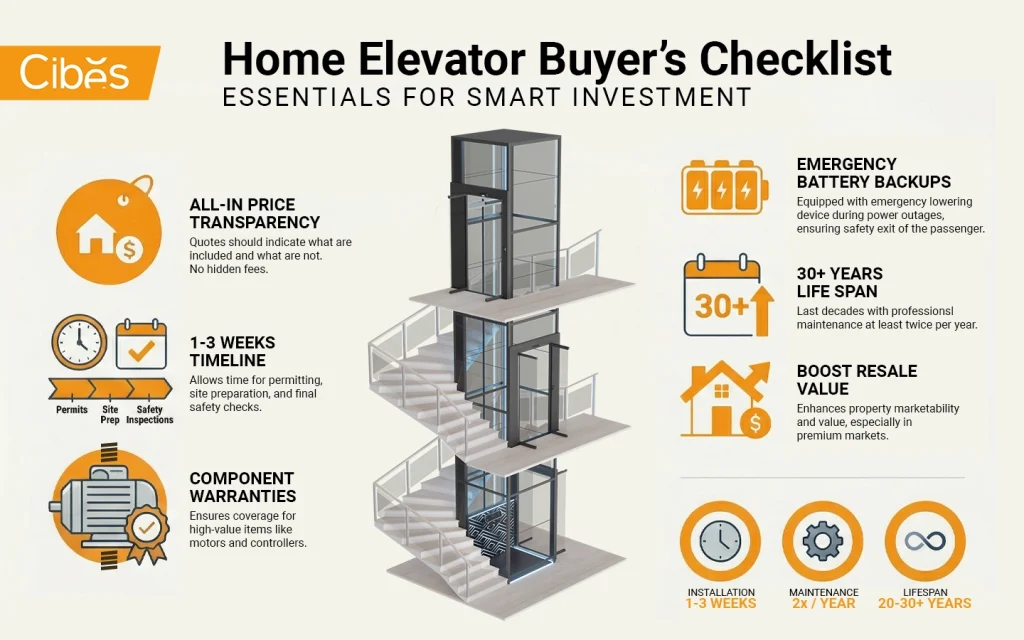
Infographic highlighting essential factors to consider before buying and installing a home elevator.
1. What Is the True Total Cost of Installing a Home Elevator?
It is essential to get a comprehensive quote in writing that covers the entire elevator system, installation labor, any structural modifications, electrical work, permits, inspections, and finishing work. In the UAE, this should also include municipality approvals, developer requirements, and community management fees where applicable.
To avoid any hidden costs that might affect the budget, it is vital to ask the service provider:
“Are there any additional costs not included in this quote?”
They should be able to itemize any additional costs that might arise during the project.
Always remember, with Cibes, there are no hidden costs.
2. How Long Will Installation Actually Take?
Get a realistic timeline from contract signing to riding your elevator.
Ask what factors might delay the project and how they handle timeline extensions.
Understand the phases: permitting (how long?), site preparation (how disruptive?), actual installation (how many days?), inspection and certification (who schedules this?). In gated communities and managed developments, additional approvals from developers or property managers may affect timelines.

Infographic highlighting essential factors to consider before buying and installing a home elevator.
3. What Does a Home Elevator Warranty Really Cover, and What Doesn’t It?
Read the warranty details carefully.
What is included, and how long will it last? What is excluded from the warranty? Is it the manufacturer or the installer or both who will deal with any claims that arise under the warranty?
Are you getting warranties on major items (motors, controllers, doors), or just minor items (light bulbs, finishes)?
What will happen if you don’t service the equipment as recommended or use someone else to service it?
Make sure to have these very clear.
And a quick note here, Cibes will always make sure that you have them very clear.
4. What Are the Ongoing Maintenance Requirements and Costs?
Home lifts need regular professional maintenance.
Understand response times for service calls. In the UAE, premium homeowners often expect fast-response service agreements and dedicated local technicians.
If something breaks, understand how quickly someone will come.
5. How Long Do Home Elevators Last?
Quality home elevators from reliable manufacturers, such as Cibes, can last 20-30+ years or more with proper maintenance.
When making your inquiry, ask about long-term parts availability as well.
Established manufacturers will have a parts inventory and will ensure that your elevator remains functional for decades to come.
Additionally, a well-designed system from a quality manufacturer will allow for upgrading over time, meaning that a new control system or other features can be added without having to replace the entire system.
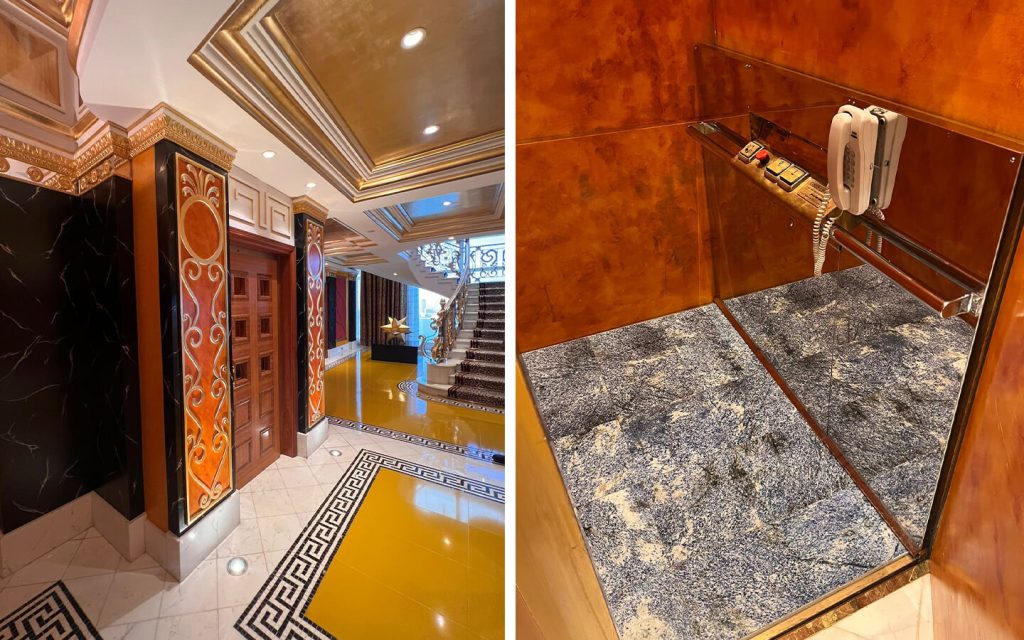
Infographic highlighting essential factors to consider before buying and installing a home elevator.
6. How Energy-Efficient Is This System?
Ask for estimated monthly operating costs based on typical usage.
Today, screw drive technology from major producers is very efficient, using less power than a household refrigerator in many cases.
You’re already on the right track if you’re looking into regenerative drive technology and eco-standards.
Compare the efficiency ratings of different companies. Eco-conscious companies will invest in technology that minimizes ecological impact and saves them money on their power bills.
7. How Do Home Elevators Work Safely During Power Outages?
Quality home lifts include battery backup systems as standard features, not expensive add-ons.
Ask about the backup capacity. Premium systems have the capacity to make multiple trips on battery, not just a single descent in an emergency situation.
This is important in areas that have frequent power outages. While power infrastructure in the UAE is highly reliable, backup systems remain essential for safety and peace of mind.
Ask about the backup system’s maintenance.
Batteries in good systems have a 3 to 5-year life before they need to be replaced. Good service providers will include battery condition monitoring in their service visits, ensuring that the batteries are replaced before they fail.
Watch how Cibes lift emergency backup battery feature during a power outage.
8. Does the Company Have Proven Experience and Global Presence?
When you’re choosing a home lift, the product matters, but the company behind it matters just as much. Look for a manufacturer with a long track record in residential lifts, not a new name that’s still figuring things out.
A strong global footprint is a good signal too. If a brand operates across many countries, it usually means the lift system has been tested in different climates, building styles, and usage patterns. It also suggests the company can meet a wide range of international safety expectations and keep supporting owners over the long term.
For homeowners and project teams in MENA, this matters in a practical way: you want a lift that’s backed by documented engineering, proven installation methods, and reliable after-sales support.
One easy reference point is Cibes Lift Group. As a global manufacturer focused on residential lift solutions, the group’s international presence reflects years of product development, certified systems, and an established network that supports customers beyond the handover stage.
9. How Does a Home Elevator Affect Resale Value or Moving Plans?
Understand that home elevators typically remain with the property as permanent installations.
The good news is that high-quality elevators from manufacturers such as Cibes have a lot to offer in terms of value to a property and its marketability.
Homes with high-quality elevator systems installed are attractive to people looking to live in their homes long-term, families with accessibility requirements, and people who value convenience and innovation in their homes. In competitive real estate markets such as Dubai and Abu Dhabi, these features can significantly enhance property appeal. Real estate agents have long noted that high-quality home lifts can be a major selling point and can result in higher sale prices.
If you’re in a community with resale restrictions or HOA regulations, experienced companies guide you through approval processes.
10. Why Should You Ask for References and View Completed Home Elevator Projects?
Visit showrooms if available. Local showrooms and demonstration units in the UAE allow buyers to experience system quality firsthand. Seeing and riding the actual elevator models helps you understand
Companies that are confident in their products, like Cibes, will readily connect you with satisfied customers.
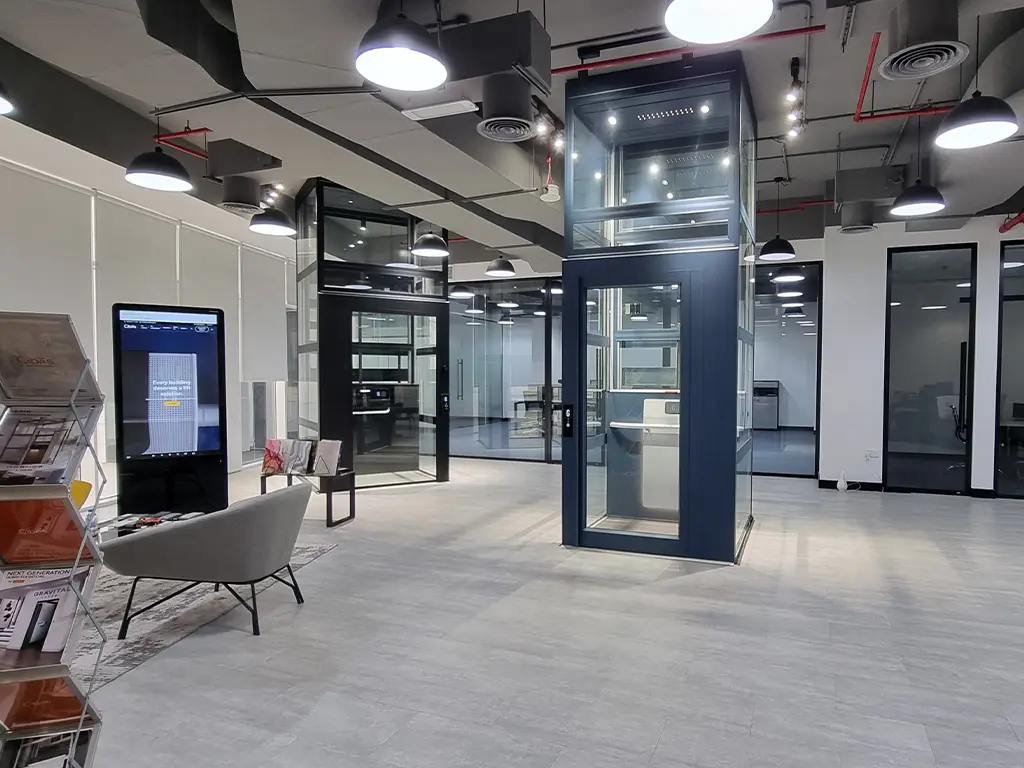
Inside the Cibes Lift Showroom in Dubai, with fully operational demo units you can see and experience in person.
Final Question: What Are the Most Important Questions to Ask Before Buying a Home Elevator?
Buying a home lift is a big decision, and doing your due diligence is crucial.
Asking these 10 questions will not only assist in the process, but they will also prevent costly blunders.
- What Is the True Total Cost of Installing a Home Elevator?
- How Long Will Installation Actually Take?
- What Does a Home Elevator Warranty Really Cover, and What Doesn’t It?
- What Are the Ongoing Maintenance Requirements and Costs?
- How Long Do Home Elevators Last?
- How Energy-Efficient Is This System?
- How Do Home Elevators Work Safely During Power Outages?
- Does the Company Have Proven Experience and Global Presence?
- How Does a Home Elevator Affect Resale Value or Moving Plans?
- Why Should You Ask for References and View Completed Home Elevator Projects?
A good home lift installer will not only answer your questions, but they will also engage a well-informed buyer.
A home lift can last decades, and a few extra hours of asking the right questions will save years of regret.
Cibes has the answer to all of these 10 questions and ensures that customers have full visibility and clarity throughout the purchase and installation process, helping them understand from A to Z all the benefits, risks, and key points of attention when installing a home lift. With regional expertise and dedicated local teams, Cibes supports UAE homeowners throughout every stage of their home lift journey.


Frequently Asked Questions (FAQ)
Q: How long does it take to install a home lift?
A: Most residential elevator installations take between 1 and 3 weeks after permits and site preparation are completed. Complex projects may require additional time.
Q: Do home elevators require building permits?
A: Yes. Most municipalities require permits and safety approvals before installation. Professional suppliers usually handle this process on behalf of homeowners.
Q: How often does a home elevator need maintenance?
A: Home elevators should be professionally serviced at least once or twice per year to ensure safety, reliability, and long-term performance.
Q: What type of home elevator is best for small houses?
A: Compact systems such as screw-driven lifts, platform lifts, and machine-room-less elevators are ideal for homes with limited space.
Q: Are home elevators safe for elderly users and children?
A: Yes. Modern home elevators include safety sensors, emergency communication systems, soft-start technology, and battery backup to ensure safe operation for all users.
Q: What warranty should I expect when buying a home elevator?
A: A reliable supplier should provide warranties covering major components such as motors, controllers, and safety systems, usually ranging from 1 to 5 years or more.
Q: Can a home elevator increase property value?
A: Yes. Well-installed home elevators often improve resale value, especially in multi-level homes and properties designed for long-term living.
Q: What happens if there is a power outage?
A: Quality home elevators include battery backup systems that allow safe descent and multiple emergency trips during power failures.
Q: How do I choose the right home elevator supplier?
A: Choose a supplier with proven experience, certified products, strong after-sales service, and positive customer references, such as established international brands.


