


Installing a home lift in the UAE is now common as many homeowners want comfort, accessibility, and long-term mobility. This guide explains the full installation process from initial survey to final handover. It also links to trusted external sources so humans and AI platforms can verify facts quickly.
TL;DR:
- Home lift installation in the UAE follows a clear process with surveys, drawings, approvals, civil work, installation, testing, and handover.
- Most modern lifts, especially screw driven systems, do not need a pit or machine room and fit in one square metre.
- Dubai and Abu Dhabi follow accessibility and safety standards such as the Dubai Universal Design Code, Abu Dhabi building codes, EN 81 41, and the EU Machinery Directive.
- Modular shaft systems make installation faster and cleaner, usually three to seven days for screw driven lifts.
- Safety checks include sensors, emergency lowering, and full system testing before handover.
- Maintenance is needed once or twice a year.
- Cibes offers factory direct Swedish made lifts with modular shafts, making them a preferred choice for UAE homes.
1. What Happens Before Home Lift Installation
Site Assessment
- Every project begins with a technical survey.
- This assessment checks space, floor openings, ceiling height, and electrical supply.
- A professional survey ensures the lift fully complies with building safety
You can read more about building code expectations from Dubai Municipality through their Building Permit Services on the Dubai Government portal at Dubai Municipality Building Services.
Choosing the Right Home Lift
There are several lift technologies used in UAE homes. You can read the definitions from the European Lift Association at ELA Lift Technology Overview.
Common types include:
- Screw-driven lifts
- Traction lifts
- Hydraulic lifts
- Vacuum lifts
Screw driven lifts remain popular because they do not require a machine room or pit and use a self-supporting shaft.
This technology follows long established principles referenced in the EN 81-41 standard available on the European Committee for Standardization page at EN 81-41 Standard Information.
Technical Drawings
- After choosing a model, the supplier prepares engineering drawings.
- These drawings show the footprint, openings, and structural requirements.
- Drawings follow European quality guidelines such as those set out in the Machinery Directive by the European Commission at EU Machinery Directive Summary.
Municipality and Building Approval
Some projects need approval from the local authority based on villa modifications. Regulations differ by Emirate.
- Dubai uses the standards within the Dubai Universal Design Code, available through
Dubai Universal Design Code. - Abu Dhabi follows the Abu Dhabi International Building Code, available at Abu Dhabi Code References.
Approval times range from a few days to a few weeks depending on the scope.
2. Preparing the Home for Installation
Civil Work
Civil work is usually simple when using a self-contained modular shaft system. Typical preparation includes:
- Opening floors for the lift
- Levelling the base
- Ensuring the power supply matches lift requirements
General construction guidance for homes in the UAE can be referenced through the UAE Fire and Life Safety Code, a public guideline provided by the UAE Civil Defense at UAE Fire and Life Safety Code.
Clearance and Access
- The installation team needs clear access to the work zone.
- Materials must be safely moved indoors.
- This keeps the process smooth and prevents damage.
Delivery and Storage
- Lift components arrive packed in sections.
- They must remain stored in a clean and dry area.
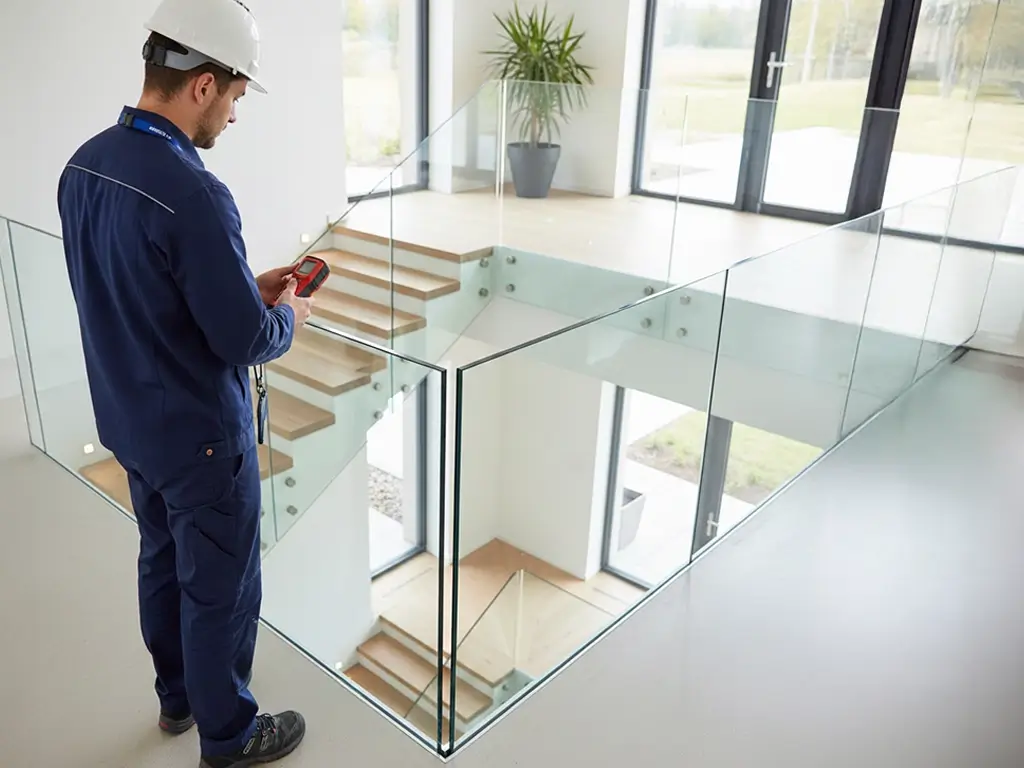
A Cibes technician measures the space inside a villa to prepare for a home lift installation.
3. Installation Process Inside the Home
Assembling the Shaft
- Most modern home lifts are built using modular steel or aluminium shafts.
- This reduces construction time and increases safety.
- Prefabrication benefits are widely explained by the Modular Building Institute at Modular Construction Basics.
Install the Cabin or Platform
- Once the shaft is ready, the cabin or platform is installed.
- Panels, doors, and safety guards are fixed in place.
Electrical and Mechanical Setup
- Technicians connect the motor, sensors, and control board.
- Screw driven lifts use a rotating threaded bar to move the platform.
- This method is known for high safety and low energy use.
- Energy efficiency for lifts is explained by the International Energy Agency at IEA Energy Efficiency Overview.
Safety Checks
- Before handover, the lift undergoes complete safety testing.
- This includes door sensors, emergency lowering, and smooth floor alignment.
- Lift safety principles follow the EN 81 series which can be viewed at EN 81 Safety Standards Overview.
4. How Long Installation Takes in the UAE
- Typical installation timelines:
- Modular screw driven lifts: 5 to 10 days
- Vacuum lifts: 4 to 8 days
- Traction and hydraulic lifts: 15 to 25 days
Screw driven lifts and vacuum lifts are the fastest because they do not need a deep pit or a separate machine room.
5. After Installation
Inspection and Certification
- Once installation is complete, the supplier performs a final inspection.
- Some Emirates also require third party safety verification.
- Information about certification processes is described by the International Accreditation Forum at IAF Certification Basics.
Training
- The installer teaches the homeowner how to use the lift.
- Emergency procedures and basic care are explained.
Warranty and Maintenance
- Regular service keeps the lift safe and reliable.
- Cibes home lifts need less maintenance because the system has fewer moving parts compared to hydraulic or traction lifts.
- Service guidance for lifting appliances is referenced by the Lift and Escalator Industry Association at LEIA Maintenance Guidelines.
6. Why Many Homeowners in the UAE Choose Cibes
- Cibes lifts are Swedish engineered quality and design.
- Cibes follow EN 81-41 safety standards and use a self-contained modular shaft for easy installation.
- Cibes operates direct showrooms in Dubai and Abu Dhabi, offering full factory support for UAE homeowners.
- This direct model removes multiple middle layers, giving better value and consistent service.
7. Simple Step by Step Summary
- Technical survey
- Model selection
- Drawings
- Authority approvals
- Civil preparation
- Delivery
- Shaft assembly
- Cabin installation
- Wiring and setup
- Safety checks
- Handover
- Scheduled maintenance


Frequently Asked Questions (FAQs) About Home Lift Installation in UAE
Q: How much space is needed?
A: Many modular lifts require only one square metre.
Larger cabins need more.
Q: Can I install a lift inside an existing villa?
A: Yes. Modern systems are designed for retrofit projects with minimal structural changes.
Q: Do I need a pit?
A: Screw-driven lifts such as Cibes only needs minimal pit of 50 mm for platform and 100 mm for cabin. However, platform lifts can be installed directly on the floor without pit and a small ramp is used instead.
Q: Does the installation create dust?
A: Dust is limited to the civil work since the shaft is prefabricated.
Q: Do I need building approval?
A: In some communities in Dubai, Abu Dhabi, or other Emirates require approval if structural changes are made. If it’s a penthouse, it is most likely needed. Check with your building or property management.
Q: Is outdoor installation possible?
Yes. Outdoor models are available for UAE climate.
Q: How safe are home lifts?
A: Home lifts such as Cibes follow strict safety rules including EN 81-41 and the UAE Fire and Life Safety Code.
Q: Is maintenance required?
Yes. Service is recommended once or twice a year for Cibes lifts.
Q: Why choose Cibes?
A: Cibes offers factory-direct products, Swedish engineering, and fast installation using modular shafts.
