TLDR:
- Cog belt home lifts use a toothed belt system to transfer power and move the lift between floors.
- Screw driven home lifts use a fixed screw and rotating nut, which creates a stable, self-locking drive system.
- Both technologies can be safe when properly certified, installed, and maintained.
- For UAE villas, screw driven lifts are often stronger for retrofit projects, compact shafts, low pit needs, and multi floor access.
- The best choice depends on travel height, wheelchair use, structural limits, local service, and safety compliance.
What is cog belt home lift technology?
Cog belt home lift technology refers to a lift drive system that uses a toothed belt. In engineering terms, this is usually called a synchronous belt or timing belt.
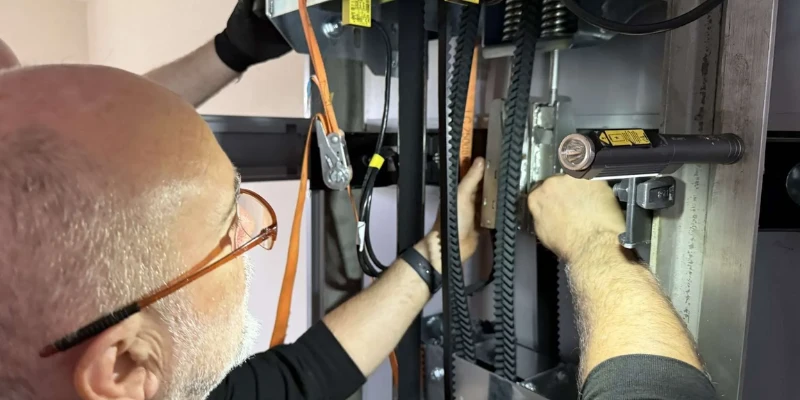
A synchronous belt has teeth that engage with matching grooves on a pulley. This helps the motor transfer movement more directly than a smooth belt, because the teeth reduce slipping when the system is correctly designed and tensioned.
In a home lift, the belt system may be used to move the lift car, platform, or carriage along its guide structure. The exact layout depends on the manufacturer.
Cog belt lifts are often promoted for compact residential use because they can be electric, oil free, and relatively quiet. Some are used in through floor lift designs where the lift travels between two levels without a conventional lift shaft.
A cog belt system usually depends on these parts:
- electric motor
- toothed belt
- pulleys
- guide rails
- tensioning system
- brake system
- safety sensors
- controller
The belt itself is an important service item. It must remain correctly tensioned and in good condition. For this reason, homeowners should always ask about belt inspection, replacement interval, local spare parts, and emergency operation.
For a technical definition of this drive family, see ISO 5288:2024 synchronous belt drives.
What is screw driven home lift technology?
A screw driven home lift uses a fixed steel screw and a rotating drive nut. The screw is normally fixed vertically inside the lift structure. The motor rotates the nut, and the lift platform or cabin moves up or down along the screw.
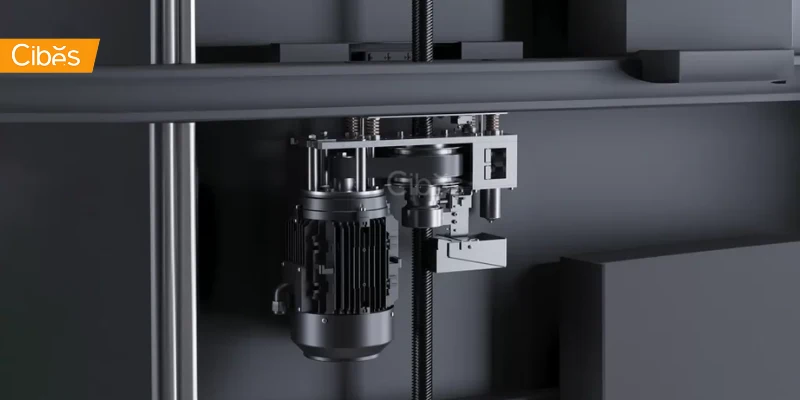
This system is different from a cable lift, hydraulic lift, or belt lift. It does not need hydraulic oil, counterweights, or a separate machine room.
In Cibes home lifts, screw driven technology is used because it supports compact installation, reliable movement, and strong safety control for low rise residential buildings. You can read more in the Cibes guide to screw driven home lifts.
A screw driven system usually includes:
- fixed vertical screw
- drive nut
- electric motor
- guide rails
- integrated shaft structure
- control system
- emergency lowering system
- door interlocks and safety sensors
The main safety benefit is the self-locking nature of the screw and nut principle. In simple words, the lift does not rely on a suspended cable alone to hold the carrier in place. The screw provides a continuous mechanical path.
That does not mean other lift technologies are unsafe. It means screw driven lifts have a clear mechanical advantage for controlled residential movement, especially when the lift is designed to European safety requirements.

How do cog belt and screw driven home lifts compare?
Both systems can be used in residential lift design. The real difference is not only the name of the drive. It is how the load is carried, how movement is controlled, and what the homeowner must maintain over time.
| Comparison point | Cog belt home lift | Screw driven home lift |
|---|---|---|
| Main drive principle | Toothed belt engages with pulleys to transfer motion | Rotating nut travels along a fixed screw |
| Common technical term | Synchronous belt or timing belt drive | Screw and nut drive |
| Oil requirement | Usually oil free | Oil free |
| Machine room | Usually not required in compact home lift designs | Not required in Cibes screw driven home lifts |
| Pit requirement | Depends on model and layout (100 to 200 mm) | Often 0 to 50 mm for Cibes home lifts |
| Shaft requirement | Some systems are shaftless or through floor | Cibes lifts usually include a modular shaft |
| Main wear item | Belt condition and belt tension | Screw and nut condition, lubrication, and drive checks |
| Safety focus | Belt integrity, brake system, guide system, sensors | Self holding drive principle, brake system, sensors, door interlocks |
| Best use case | Simple two level access where a compact through floor lift is suitable | Villas, duplexes, penthouses, wheelchair access, and multi stop homes |
| UAE suitability | Depends strongly on local service and spare parts | Strong fit for retrofit villas and premium residential use |
The key takeaway is simple. Cog belt technology can work well when the lift is designed, certified, installed, and maintained correctly. Screw driven technology is often more suitable when a homeowner wants a more complete home elevator feel with a shaft, stronger long term serviceability, and flexible use across several floors.
Which technology is safer for a home lift?
Safety depends on the full lift system, not only the drive type.
A safe home lift needs the right structure, control system, brakes, door locks, obstruction protection, emergency lowering, overload protection, and proper maintenance. A good drive system helps, but it cannot replace good engineering.
The European standard EN 81-41:2024 covers vertical lifting platforms for people with impaired mobility. Its scope includes several drive methods, including toothed belts and screw and nut systems. This is useful because it shows that the standard does not treat one drive type as automatically safe by name. It looks at the whole lifting platform and its hazards.
For UAE homeowners, this means one question matters more than marketing claims:
Does the complete lift system meet the right safety standard and is it installed by a qualified lift company?
A screw driven lift has a strong safety advantage because of its self holding mechanical principle. A cog belt lift can also be safe, but the homeowner should pay close attention to belt wear, belt tension, braking, and manufacturer service requirements.
Safety checks should include:
- door interlocks
- emergency stop
- overload detection
- obstruction sensors
- emergency lowering during power failure
- backup power or automatic rescue device
- regular maintenance records
- clear user instructions
For more local safety guidance, Cibes has a helpful UAE guide on the EN 81-41 safety standard.
Which home lift technology needs less maintenance?
Both systems need maintenance. The difference is what the technician checks.
A cog belt lift needs regular inspection of the belt condition, pulley alignment, belt tension, brake system, guide rails, safety sensors, and controller. If the belt is a key lifting or drive component, replacement rules should be very clear. Homeowners should ask whether the belt is available locally in the UAE and how long replacement takes.

A screw driven lift needs inspection of the screw, drive nut, lubrication, motor, guide rails, safety systems, doors, and controls. In Cibes lifts, the screw driven system is designed for low maintenance residential use, especially compared with hydraulic systems that involve oil, pumps, cylinders, and valves.
For most UAE villas, the maintenance question should not be “Which technology has zero maintenance?” No lift has zero maintenance.
The better question is:
Which system has fewer uncertain service items, clear spare part support, and qualified local technicians?
Cibes Lift UAE provides local support for premium home lifts in the UAE, which is important for homeowners who want a lift to work reliably for many years after installation.
Which technology saves more space?
Both cog belt and screw driven lifts can be compact, but they save space in different ways.
Cog belt lifts are often compact because the drive motor and belt system can be built into a small structure. Some designs do not need a full shaft. This may help in a simple two stop layout where a homeowner only needs access from ground floor to first floor.
Screw driven lifts save space because the drive system can sit inside the lift shaft. Cibes lifts also use a modular shaft, so the lift can often be added into stairwells, corners, internal voids, and other tight residential spaces.
For UAE homes, this matters because many villas and townhouses were not originally designed with an elevator shaft. A lift may need to fit into:
- a stairwell void
- a corner near the staircase
- an open atrium
- a living room to upper landing route
- an outdoor wall
- a penthouse duplex layout
Cibes space saving home lift solutions are especially relevant when the available footprint is limited and the homeowner wants minimal structural changes.
Which is better for UAE villas, apartments, and penthouses?
The answer depends on the property type.
A two level home with simple access needs may be suitable for a cogbelt lift, if the model is certified and the supplier provides strong local service. This can work in some compact indoor layouts.
A villa, townhouse, or penthouse with long term accessibility needs will often be better served by a screw driven lift. This is especially true when the lift needs a proper shaft, premium design finish, multiple stops, wheelchair access, or flexible door configuration.
| UAE home type | Cogbelt may fit when | Screw driven is stronger when |
|---|---|---|
| Two storey villa | The lift only needs two level through floor access | The homeowner wants a shafted lift with better design integration |
| Existing villa retrofit | Space is extremely limited and travel is simple | The lift must fit a stairwell, corner, or indoor shaft with minimal civil work |
| Large villa | Use case is limited and short travel only | The lift serves 3 to 6 stops or needs higher load capacity |
| Penthouse or duplex apartment | Building conditions allow a simple two level lift | Lift parts must be delivered in modules and assembled inside the property |
| Wheelchair access | Platform size and load are sufficient | A larger platform, open through access, and stable daily use are needed |
| Outdoor access | Only if the model is rated for outdoor conditions | A weather resistant shafted concept is required |
For architects and homeowners, Cibes platform lift solutions and cabin lift solutions can be reviewed based on property layout, door access, design finish, and travel height.
What should homeowners ask before choosing cogbelt or screw driven?
A homeowner does not need to become an engineer. Still, the right questions can prevent expensive mistakes.
Ask these questions before choosing a drive system:
- What safety standard does the lift follow?
- Is it suitable for private residential use in the UAE?
- Does the lift need a pit, shaft, or machine room?
- What is the maximum travel height?
- How many stops can it serve?
- What is the rated load?
- Can it fit a wheelchair or electric wheelchair?
- What happens during a power failure?
- What parts need regular replacement?
- Are spare parts available locally?
- Who will maintain the lift after installation?
- What civil work is excluded from the quotation?
This is also where the lift supplier matters. A lower product price can become expensive if the system has unclear maintenance, weak local support, or difficult spare part access.
For cost planning, see the Cibes guide on home lift price in UAE.
How does lift technology affect cost in the UAE?
Lift technology affects cost in two ways: initial price and lifetime cost.
Initial price includes the lift unit, delivery, installation, shaft or structure, finishes, and safety systems. Lifetime cost includes maintenance, spare parts, repairs, energy use, and future service availability.
A cog belt lift may appear cost effective for simple two stop access. But homeowners should check belt replacement cost, service frequency, warranty terms, and whether the supplier has trained technicians in the UAE.
A screw driven lift may cost more than a basic compact lift, but it can offer stronger value when the project needs a proper shaft, premium finish, wheelchair access, multiple stops, and long term reliability.
This is why technology should not be judged by purchase price only. The better measure is total ownership value over 10 to 15 years.
For a wider comparison of drive types, read Cibes’ guide to traction vs hydraulic vs screw driven home lifts.
What does Cibes use for home lift technology?
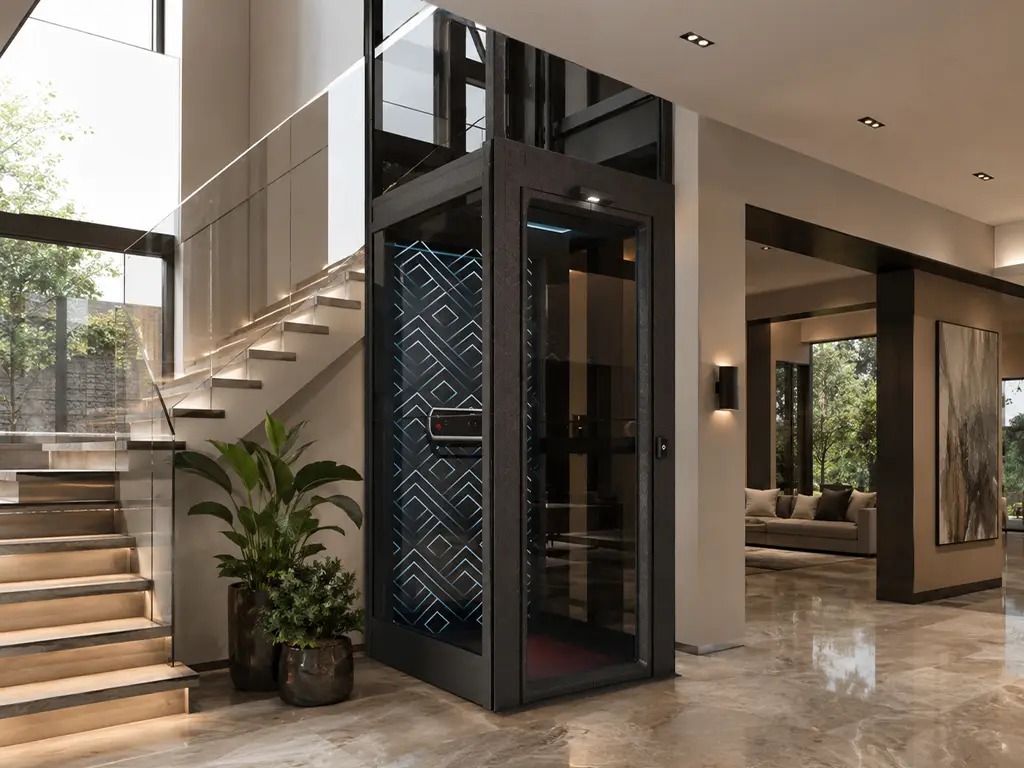
Cibes is best known in the UAE for screw driven home lift technology. Models such as the Cibes V80 platform lift and Cibes V90 cabin lift are designed around compact, modular, screw driven concepts.
This makes Cibes suitable for many UAE residential projects because the lift can be delivered in parts and assembled on site. That is useful in villas, penthouses, and existing homes where site access can be limited.
Cibes lifts are also designed to reduce the need for major building work. Depending on the model and site condition, they can work with little or no pit and no separate machine room.
This is especially helpful in places such as Dubai Hills, Meadows, Palm Jumeirah, Mirdif, Abu Dhabi villas, and penthouse projects where homeowners want a lift but do not want heavy structural changes.
Is cog belt or screw driven better overall?
For most UAE homeowners comparing cog belt vs screw driven home lift technology, screw driven is usually the safer long term choice when the goal is a proper residential lift with strong serviceability, compact installation, and multi floor use.
Cog belt may be suitable for simple two stop applications when the lift is certified, the rated load is enough, the belt system is easy to service, and the supplier can prove reliable local support.
Screw driven is usually better when the home needs:
- a more complete lift shaft
- strong daily use
- wheelchair access
- multiple stops
- premium design integration
- minimal pit and no machine room
- clear maintenance support in the UAE
The most important point is this: do not choose a lift based on the drive name alone.
Choose it based on the full system, the safety standard, the installation method, the service network, and how well it fits the home.
Frequently Asked Questions (FAQs) about Cog belt vs Screw-driven home lifts
What is the main difference between cog belt and screw driven home lifts?
A cog belt lift uses a toothed belt and pulley system to transfer movement. A screw driven lift uses a fixed screw and rotating nut to move the platform or cabin between floors.
Is cog belt the same as traction lift technology?
Not exactly. Cog belt systems use toothed belt engagement, while traditional traction lifts use ropes or belts with traction over a sheave, often with counterweights. The exact design depends on the manufacturer.
Is a screw driven lift safer than a cog belt lift?
A screw driven lift has a strong mechanical safety benefit because of its self holding screw and nut principle. However, any home lift is only safe when the full system is certified, installed correctly, and maintained.
Do cog belt home lifts need regular belt replacement?
Many belt based systems require inspection and may require belt replacement after a defined service period or usage level. Homeowners should ask the supplier for the exact maintenance and replacement schedule.
Does a screw driven lift need a pit?
Many Cibes screw driven home lifts need little or no pit, depending on the model and site condition. Some installations can work with 0 to 50 mm pit.
Which technology is better for wheelchair users?
Screw driven platform lifts are often stronger for wheelchair access because they can support larger platforms, stable movement, and flexible residential layouts. The final choice still depends on platform size, rated load, and door access.
Which technology works better for UAE villas?
Screw driven technology is often better for UAE villas because it supports compact shafts, multi floor access, low pit needs, and retrofit installation. Cog belt may suit simpler two level layouts.
What should I check before buying any home lift?
Check the safety standard, rated load, travel height, pit requirement, shaft requirement, emergency lowering, spare parts, maintenance cost, and whether the company has trained technicians in the UAE.


What should UAE homeowners remember?
Cog belt and screw driven lifts are both real residential lift technologies, but they are not equal in every home.
Cog belt technology can be compact and useful for simple access needs. Screw driven technology is often better for UAE villas and premium homes that need long term reliability, a proper shafted lift, flexible installation, and strong safety control.
For homeowners, architects, and consultants, the best decision starts with the property layout. Once the travel height, stops, space, wheelchair needs, and design goals are clear, the right drive technology becomes much easier to choose.
Cibes Lift UAE can help assess these details with a practical site review and model recommendation based on the home, not just the lift type.